
Faba Beans 25/26 - Sell or Hold?

Updated: Dec 22, 2025
Simon Hutt
This is a review of the current market conditions and
a forecast estimate of both Export and Domestic markets into 2026

The ABARES 25/26 Faba Bean yield estimate is 854kmt nationally
At current export pricing ($400mt delivery port zones at todays pricing), the majority of growers we have spoken with are taking a decision to hold/store in the hope prices will increase over the next 12 months.
There are only 2 real options for selling Faba Beans - the export market or the domestic feed market
Roughly 3-400kmt is exported each year, and the majority is sent as bulk cargo to the Middle East, however the major buyer Egypt still has a surplus of 170kmt from 24/25.
This surplus has reduced the export demand from Australia this season to closer to 250kmt (based on the usual 400kmt export, which is at the top end of the range)
Demand has also grown weaker from Egypt each year, with less access to USD for Egyptian traders and also the Egyptian pound losing comparative value (3 x less buying power than in 2021 - all export trade is priced and executed in USD)

The Australian domestic feed market demand is difficult to measure, but in a regular 600kmt yield year, domestic demand is sufficiently covered, so we estimate around 200-250kmt is normally required
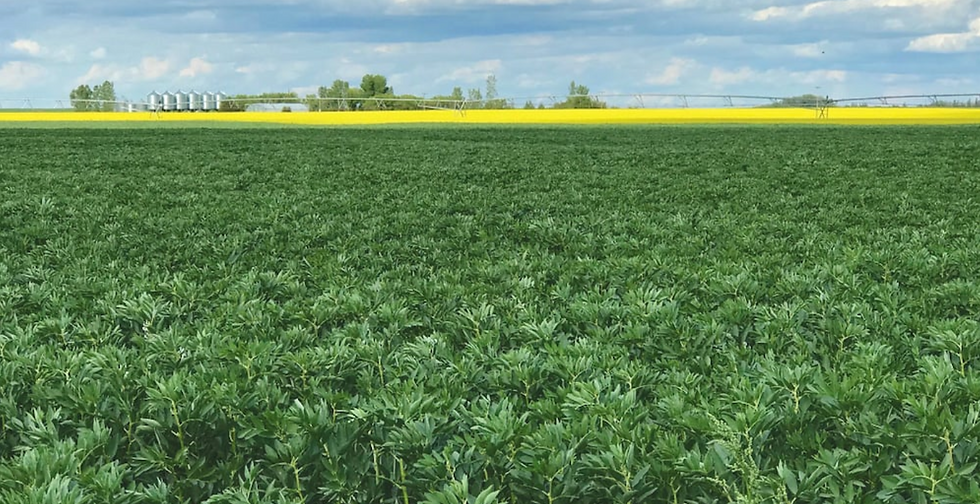
Currently however, with lamb prices at record highs (fabas being an excellent protein source for finishing at over 30%), and current price points convincing feed pellet manufacturers to make the protein switch to fabas from more expensive South American soymeal - domestic demand will be higher.
Additionally we are allowing for possible continued dry weather through Winter, and subsequent increases for stockfeed demand as a result.
Taking all this into consideration, we increase our domestic demand estimate to a 350kmt.
This will leave a surplus in Australia of approximately 250kmt which will have nowhere to go. There are a number of other variables to consider though, which will affect geographical pricing, such as areas of low supply and high demand which will benefit.

Conversely, there will be areas of oversupply and lower demand, which will see lower prices
By our estimation, those that sell into the domestic feed market earlier, will take advantage of fixed pricing on a spread. As we move further through 2026, the domestic surplus should keep prices generally stable or (as basic supply/demand economics dictates) prices will go lower.
Export demand has started slowly and early signs are that there will be vastly reduced demand from the majors.
Any future sales in the feed market would need to see a price rise of around $50 to match the current #1 pricing. Storage costs, and time value of money also need to be considered in this calculation, as does freight differentials.
As always, we are seeing some short term price spikes that are outpacing the export pricing, both for domestic requirements and short covering/DCT fulfilment, however as these buyers get cover, we will see a closing of the pricing gap between the two.
Summary
On balance, we believe that holding comes with inherent risks of a price drop. Risk factors include a wet winter, the excess of domestic supply and the expectation of price rises in an oversaturated domestic feed market.
Price positives include geographical location, the lack of supply (if everyone continues holding) and large domestic buyers publishing their bids to put a “floor” into the market price
The export demand is finite however, and once the demand is covered it will be reflected in the pricing, taking competition away from domestic buyers.
Our numbers are general in nature and will not relate to everyones circumstances. We have also generously overestimated the domestic demand, and underestimated the lack of interest from Egypt in particular.

Comments