
A deep dive into the lentil market, where prices are heading and why.

Updated: Nov 28, 2025
Australian Lentil Harvest & Market Volatility Report – 25/26 Season
1. Executive Summary
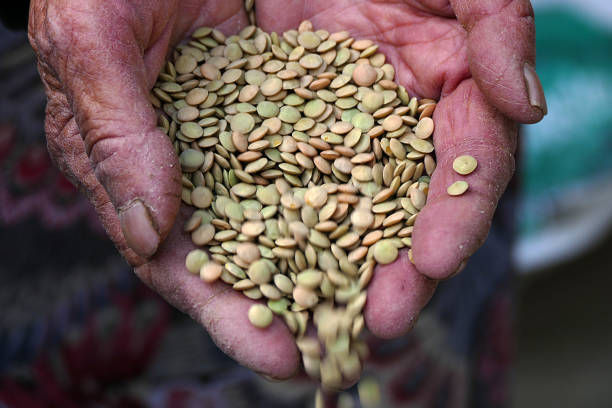
Australia is now deep into the 25/26 lentil harvest, and the market is again demonstrating the volatility that has defined the last several years.
The extraordinary price peak of $900–950mt during 2023/24 was followed by a steep correction through 24/25, with values dropping into the $600–700mt range on the back of:
India reinstating a 10% import tariff,
Large Australian and Canadian supply, and
Softer global demand and currency pressures in key markets.
As we enter the 25/26 harvest, delivered prices have stabilised around $585–635mt, buoyed by a weaker AUD, some short covering and growers selling cautiously. The export program remains strong, the quality looks excellent, and the market is adjusting to a more balanced global supply outlook.
This report covers the current harvest, global positioning, and forward-looking drivers, combining both the agronomic and market-side analysis. The breakdown of regions and varieties grown will be covered in a later report.
2. The 25/26 Australian Lentil Harvest
2.1 Production Overview
The Australian lentil area has expanded again, reflecting strong multi-year returns and risk diversification away from cereals. Early estimates place 25/26 production at 1.6–1.7 Million Metric Tonnes, placing it among the largest lentil harvests ever recorded.


Key harvest characteristics:
Yield performance: Above-average in SA and VIC, particularly in Lower EP, Mid North, Wimmera and Mallee.
Quality: Early reports suggest excellent colour and low defect levels, reducing grade spreads.
Logistics: Smooth harvest flow so far, with no delays at receival sites.
2.2 Export Readiness
Australia remains one of the world’s most export-dependent lentil producers, sending over 80–90% of production offshore.
The combination of:
high-quality seed,
efficient bulk-handling systems, and
proximity to South Asia
makes Australia a preferred origin for many buyers.
Meanwhile, the weaker AUD in late 2025 has improved Australian competitiveness against Canada, even when FOB USD prices are comparable.
3. Global Positioning & Demand
3.1 Major Producing Countries
Globally, lentil production is dominated by:

Canada
Australia
India
Turkey
United States
Canada and Australia are the two dominant exporters, controlling the majority of internationally traded red lentils.
3.2 Australian Export Markets
Australia’s top destinations remain:

India
Bangladesh
Sri Lanka
Pakistan
UAE/Egypt (both importers and re-export hubs)
Bangladesh and Sri Lanka offer consistent year-round demand, while India acts as the price-maker for the global market.
4. Price Volatility: What Happened in 24/25 — And Why It Matters Now
4.1 The Sharp 24/25 Correction
The 24/25 season was one of the sharpest price collapses in a decade, falling from just under $950mt (late 2023/24) to the low $600's by late 2024.
Primary drivers:
Tariffs restored in India (10% MFN duty; 5% concessional quota)
Large supply in both Australia and Canada
Currency and inflation pressures in South Asia limiting importer buying power
Rebalancing after unusually high 2023/24 prices
This correction is important because 25/26 begins from this lower base, reshaping grower expectations.
4.2 Seasonal Price vs Tariff Dynamics
When India sets lentil tariffs to zero, global prices tend to rise because:
Demand increases,
Import programs expand,
Inventory risk falls for Indian buyers.
When tariffs return, prices stagnate or fall.
Recent seasons illustrate this clearly:
Season | Avg Delivered Price (per/mt) | India Duty |
2020/21 | ~600 | 10% |
2021/22 | ~720 | 0% |
2022/23 | ~850 | 0% |
2023/24 | ~950 | 0% |
2024/25 | ~700 | 10% |
2025/26 (current) | ~585–635 | 10% |

The 25/26 market is operating under full tariff conditions, which caps upside without weather or policy shocks.
5. Current Market Conditions (During the 25/26 Harvest)
5.1 Prices
Delivered port/packer values (Nov–Dec 2025):
$585–635mt depending on port, variety and timing
Slightly firmer than early spring due to slower grower selling, not demand growth
Short covering and DCT fulfilment has been pushing prices slightly higher, but which also has a limited timeframe
Strong AUD/USD sensitivity — a weaker AUD props up domestic values
5.2 Demand
India:
Buying sporadically due to tariffs
Tenders and mandi (local agricultural markets which are a leading influence on import demand) prices indicate moderate deficit risk
A drop in domestic rabi (Winter crop) yields could quickly increase import appetite
Bangladesh & Sri Lanka:
Steady buyers
FX weakness limits ability to chase higher prices
MENA:
Stable but opportunistic
Substitution into peas occurs when lentils strengthens
6. GrainSource Analyst Outlook/Estimates for 25/26
6.1 Base Case — “Controlled Neutral” (Most Likely)
Range $600–680mt
No tariff changes from India
Solid export program
Growers sell gradually
Australia & Canada remain well supplied
6.2 Bull Case — “Policy or Weather Shock”
Prices reach $750–820mt if:
India cuts tariffs
Indian domestic pulse inflation spikes
Weather damages the late or finishing Australian crop
Canadian logistics or quality issues limit export flow
6.3 Bear Case — “Heavy Supply Meets Soft Demand”
Prices fall into $520–580mt if:
Australia exceeds 1.7Mmt
India slows imports further
Canadian exports accelerate
AUD strengthens considerably
7. Key Strategic Watchpoints for Industry
India’s Rabi Pulse Outlook — the largest determinant of import needs
Tariff Policy Signals — especially around India’s budget, elections, or inflation events
Canadian Carry-Out and Grade Split — quality differentials matter
AUD/USD Movements — extremely important for Australian competitiveness
Grower Selling Pace — currently slow, acting as a price stabiliser
Freight Rates — declining rates boost importer capacity
8. Final Takeaway
The 25/26 lentil season is shaping up as a stable but capped market: well supplied, well supported, but limited in upside unless Indian policy shifts.
Unlike 23/24’s explosive rally or 24/25’s sharp correction, we believe that 25/26 lentils are likely to trade in a narrower band — but volatility will still appear around policy rumours, weather events, and currency movements.
Australia enters 2026 as a global leader in lentil supply, with competitive pricing, excellent quality, and a strong reputation. The challenge — and opportunity — lies in navigating a more nuanced market driven by tariffs, FX, and strategic selling behaviour.


Comments